


Swing rod bearing assembly line - Introduction
Equipment process flow:
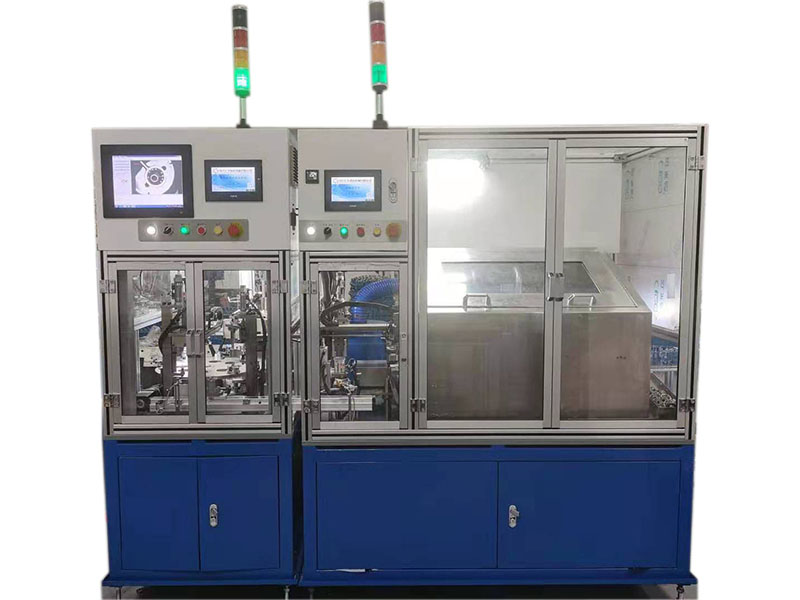
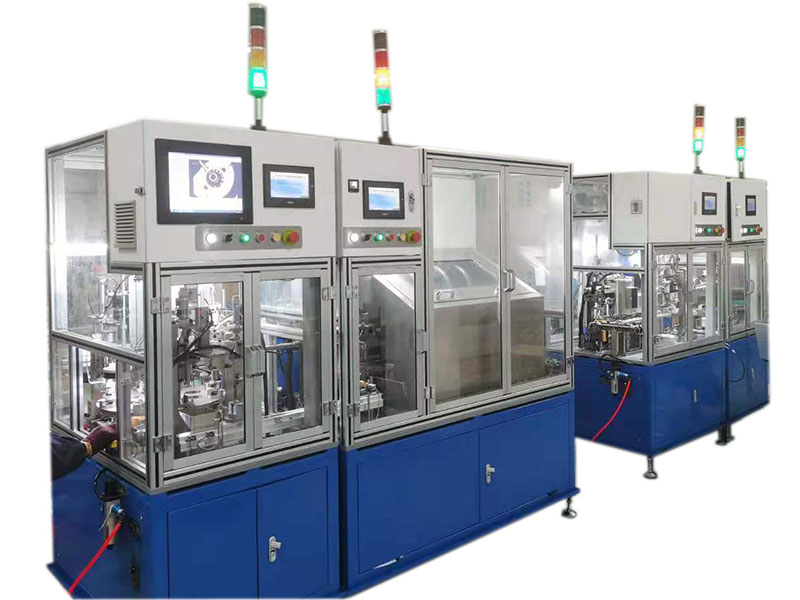
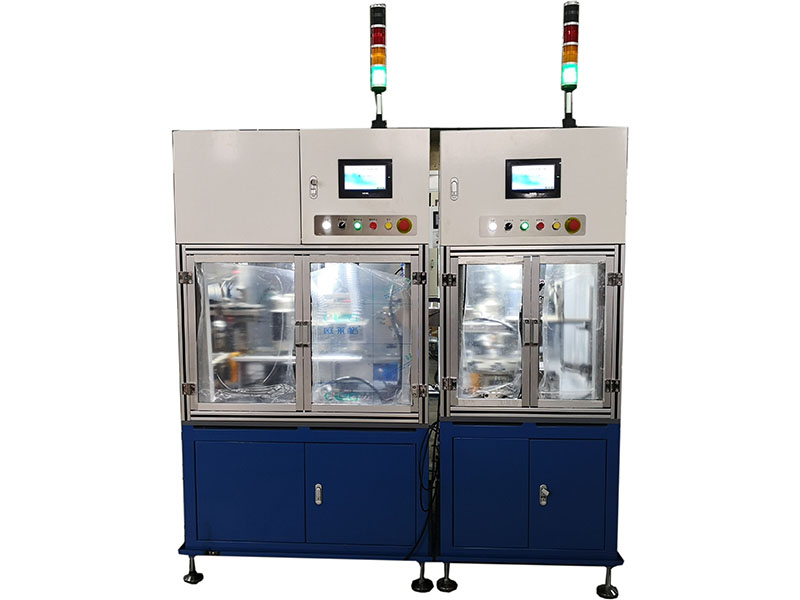
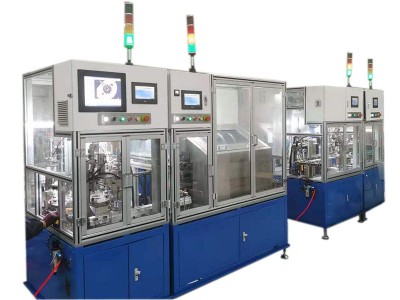
The front line manually places the assembled bearings into the feeding station of the cage assembly machine → visual inspection of ball shortage, ball collection, ball distribution, cage pressing, cage pressing height detection, qualified product discharge → demagnetization, cup positioning spray * 3, cup positioning blow drying * 2, product delivery, storage buffer area → manual measurement of clearance (table and clearance meter provided by Party A), manual placement of products into the feeding port of the rear line equipment → cup type atomization rust prevention * 1, cup type drying * 1 → automatic single-sided point finding and grease injection, uniform grease, product delivery → manual inspection and pallet loading
Parameter indicators:
(1) The detection rate of defective products in the double cage and height of the cage is 100%;
(2) 100% identification of defective products with fewer balls;
(3) Single set of bearings with high pollution content<2.5mg/set;
(4) Residual magnetic flux<0.3mT (initial magnetic flux of the product ≤ 2.5 mT);
(5) The grease injection tolerance is ± 2%, and 50 sets of continuous normal operation are all within the tolerance range; Intelligent equipment for swing rod bearing assembly line
Function description:
(1) Less ball detection: Visual image detection is used to detect whether there are fewer balls, and the products with fewer balls are removed in the subsequent NG process;
(2) Ball collection and distribution: Customized molds are used to gather steel balls together and then separate them evenly;
(3) Riveting: Customized riveting molds are used to rivet the retainer, and the cylinder is pressed directly to press the retainer in;
(4) Height detection of retaining frame: Linear resistance is used to detect the riveting height of the retaining frame, with a recognition accuracy of 0.02mm;
(5) Each product is demagnetized one by one, avoiding magnetic transfer and preventing magnetic phenomenon from occurring;
(6) Spray cleaning: cup type forced positioning rotating spray cleaning is carried out by 3 workstations, and the bearing rotation speed is adjustable; Spray pressure and time can be adjusted; In the forced rotation state, the bearing axis is not subjected to any force or is subjected to a small force, and the spray liquid is sprayed diagonally on the channel between the inner and outer rings, equipped with a spray pressure gauge;
(7) Drying: 2-station drying, using an air pump for drying;
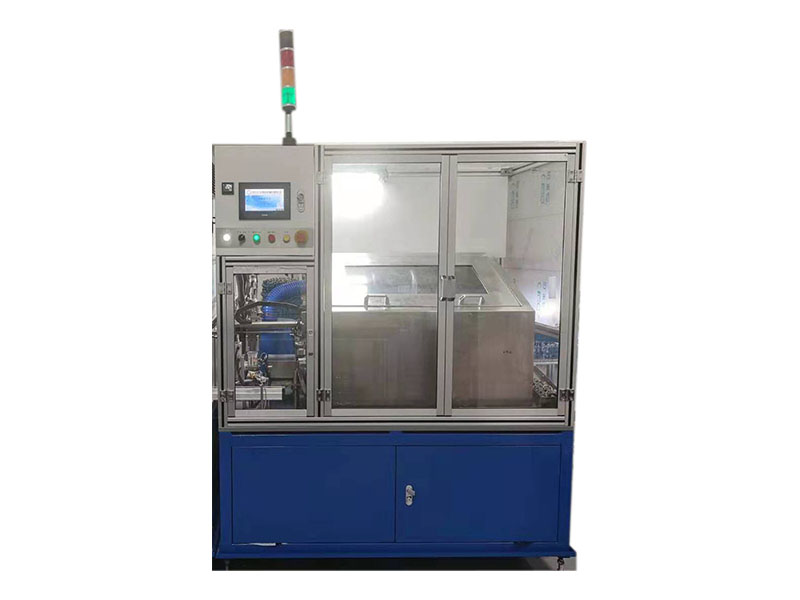
(8) The cleaning oil filtration system adopts a stainless steel five core filter, with secondary filtration (fine filtration accuracy of 3 μ, coarse filtration accuracy of 5 μ) circulating filtration. The filter should be easy to disassemble and replace the filter element.
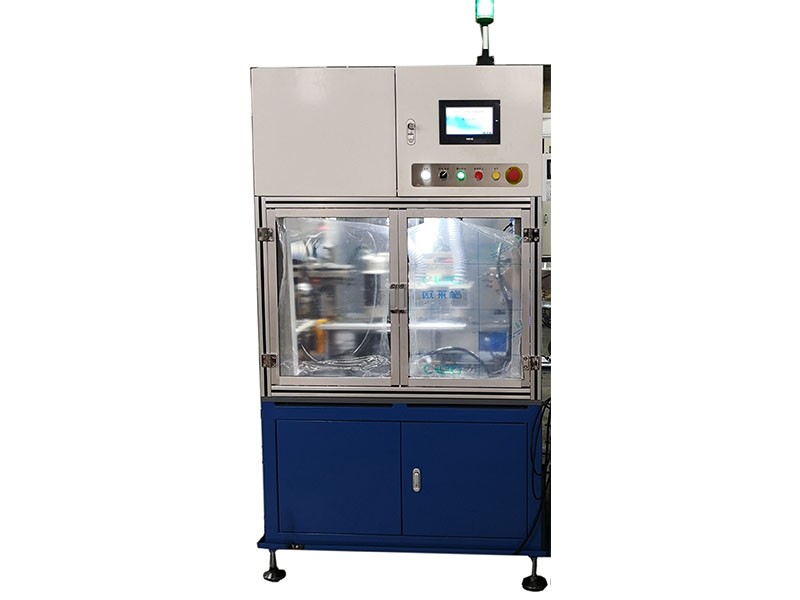
(9) Spray station: cup type single spray. When spray, the bearing is in an independent sealed spray chamber, and spray is carried out up and down at the same time;
(10) There is an oil mist recovery device located below the atomization chamber. After the atomization is completed and the oil mist recovery is finished, the sealed atomization chamber is opened;
(11) Anti rust oil atomization: using a high atomization nozzle to atomize anti rust oil, suitable for high viscosity anti rust oil;
(12) Atomization amount: The atomization amount and atomization time can be adjusted according to product requirements;
(13) Rust oil recovery: An oil return device is installed below the atomization chamber to recover rust oil and return it to the oil tank;
(14) Oil mist recovery: equipped with oil mist separation and filtration device, no need to install oil fume exhaust pipeline;
(15) Drying: Use a heating air pump to dry the rust proof bearings;